Home › Orbital surfaces
Orbital surfaces
Drawing molecular orbitals, what the two colours mean, and the options that make a lobe readable in print.
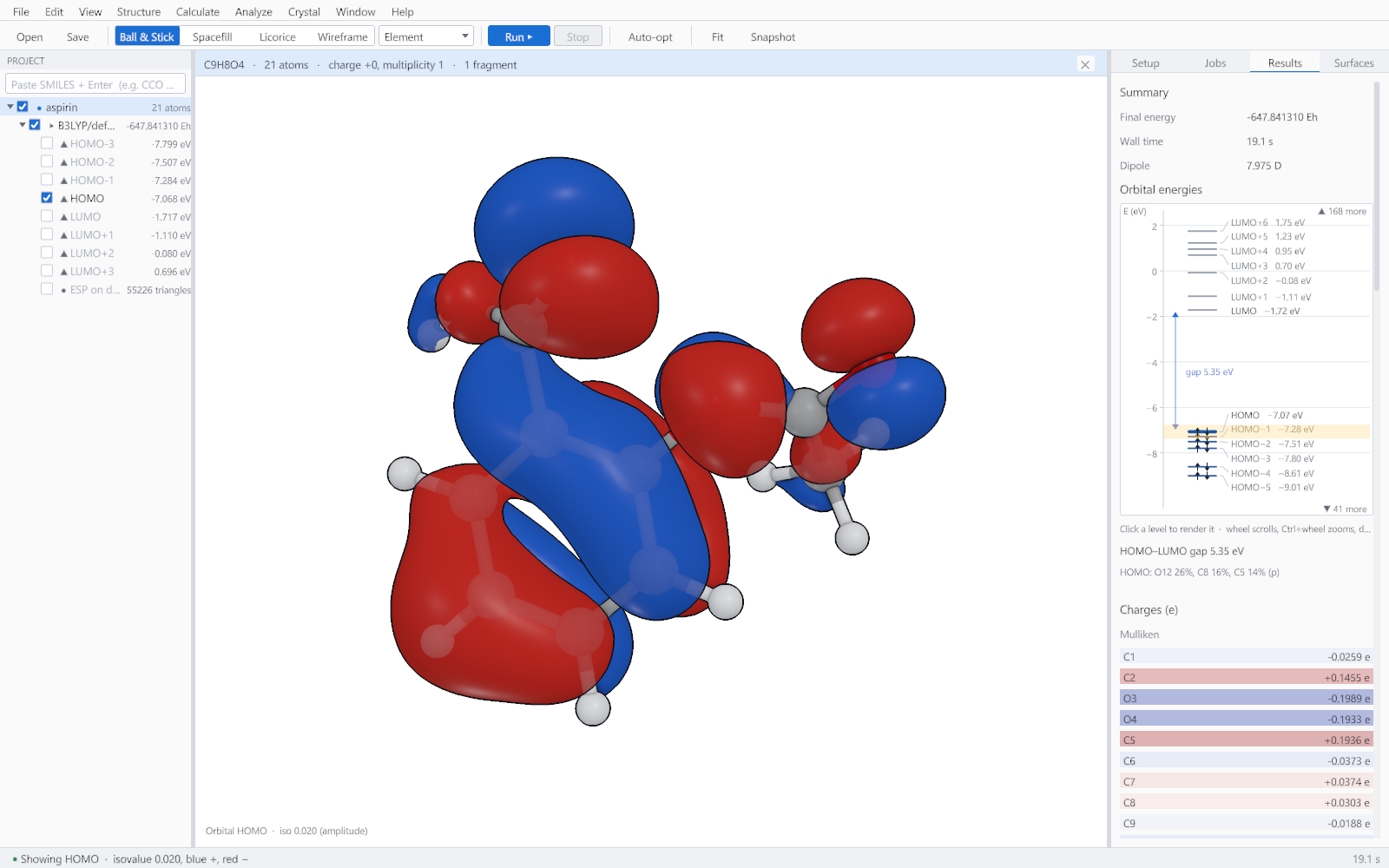
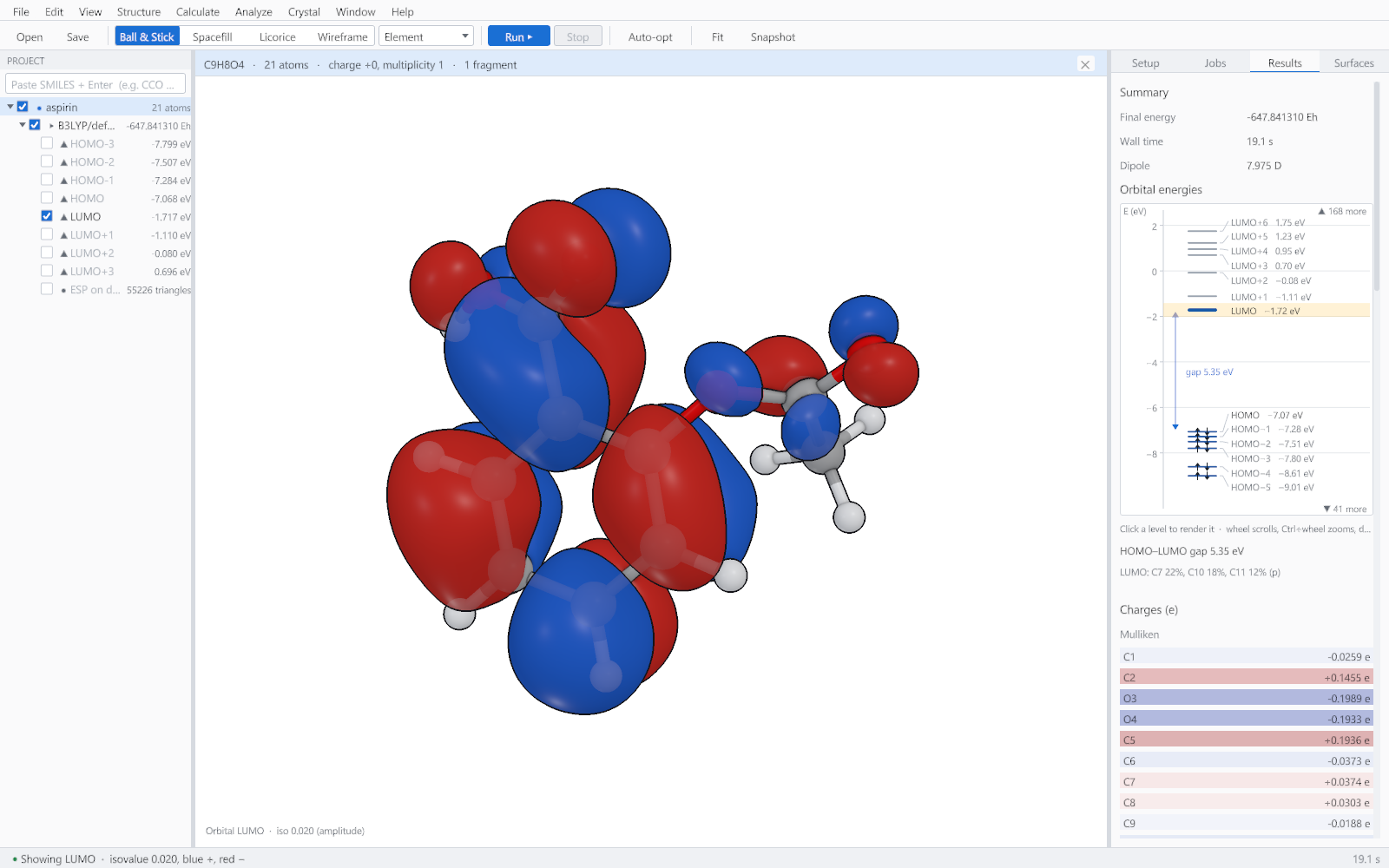
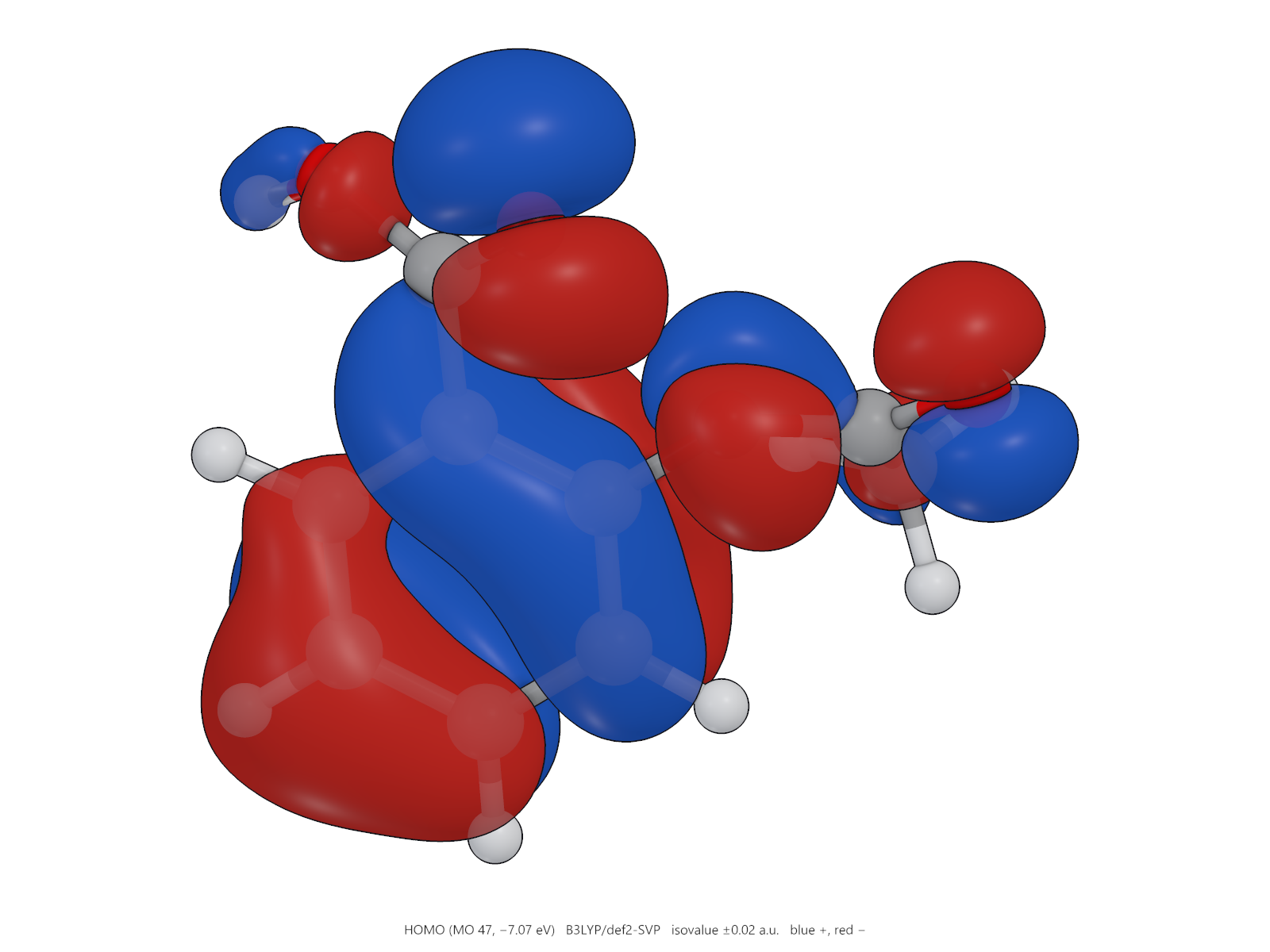
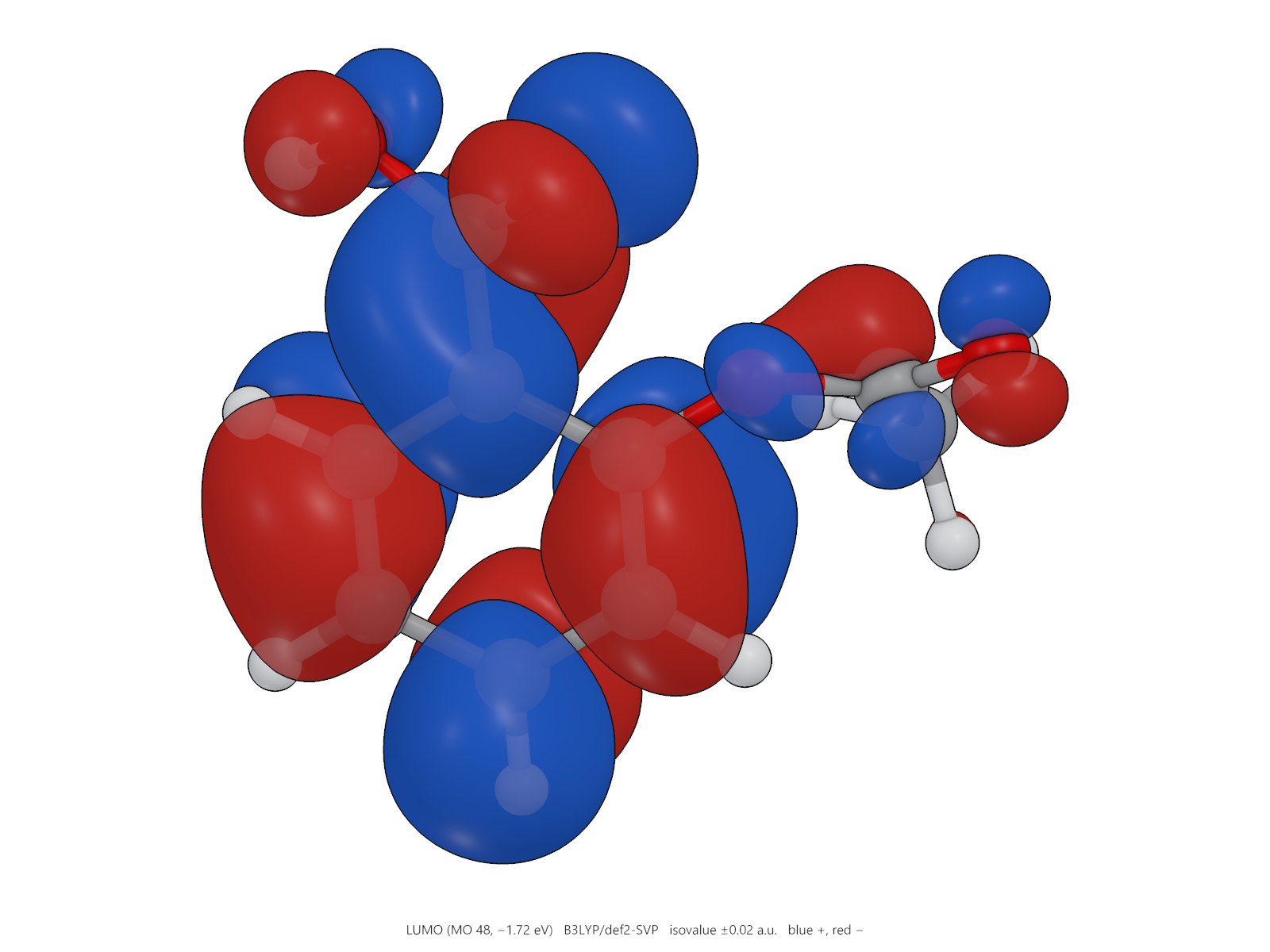
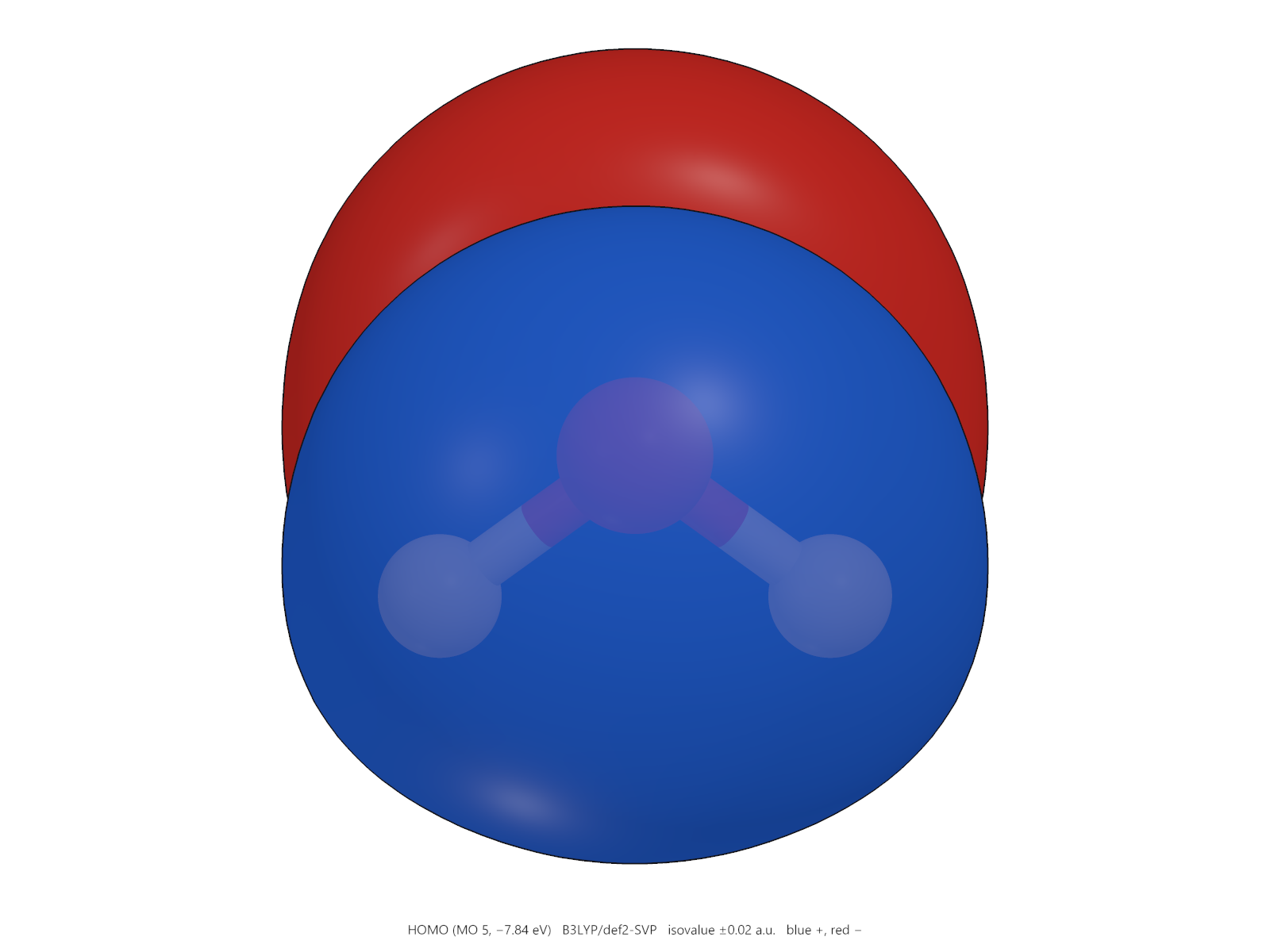
An orbital surface is drawn at a fixed amplitude of the wavefunction, by default 0.020. The wavefunction has a sign, so the surface comes in two pieces: one for the positive phase and one for the negative. Where the two lobes meet is a node, and the pattern of nodes is what makes an orbital bonding or antibonding.
The conventions used
| Element | Default | Why |
|---|---|---|
| Phase colours | Blue positive, red negative | The most widely used convention, so a reader needs no key. |
| Isovalue | 0.020 | Encloses the chemically meaningful part of the orbital. A smaller value gives a fatter, vaguer surface; a larger one shrinks it onto the atoms. |
| Opacity | Nearly opaque | So the front lobe reads as a solid object and the skeleton shows faintly inside. |
| Shading | Normals from the field gradient, soft specular highlight, ambient occlusion and a thin dark silhouette | A lobe has no texture, so without these cues it reads as a flat coloured blob. |
Options worth knowing
| Option | What it is for |
|---|---|
| Alternative phase colours | Orange and teal, or green and purple, for readers who cannot distinguish red from blue. The same figure then works in a colour-blind-safe palette. |
| See-through lobes | Every wall of every lobe is drawn in exact depth order rather than only the nearest. Use it with an opacity near one half when the inner structure of a delocalised orbital matters. |
| Isovalue | Lower it to show a diffuse orbital, raise it to show where the amplitude is really concentrated. |
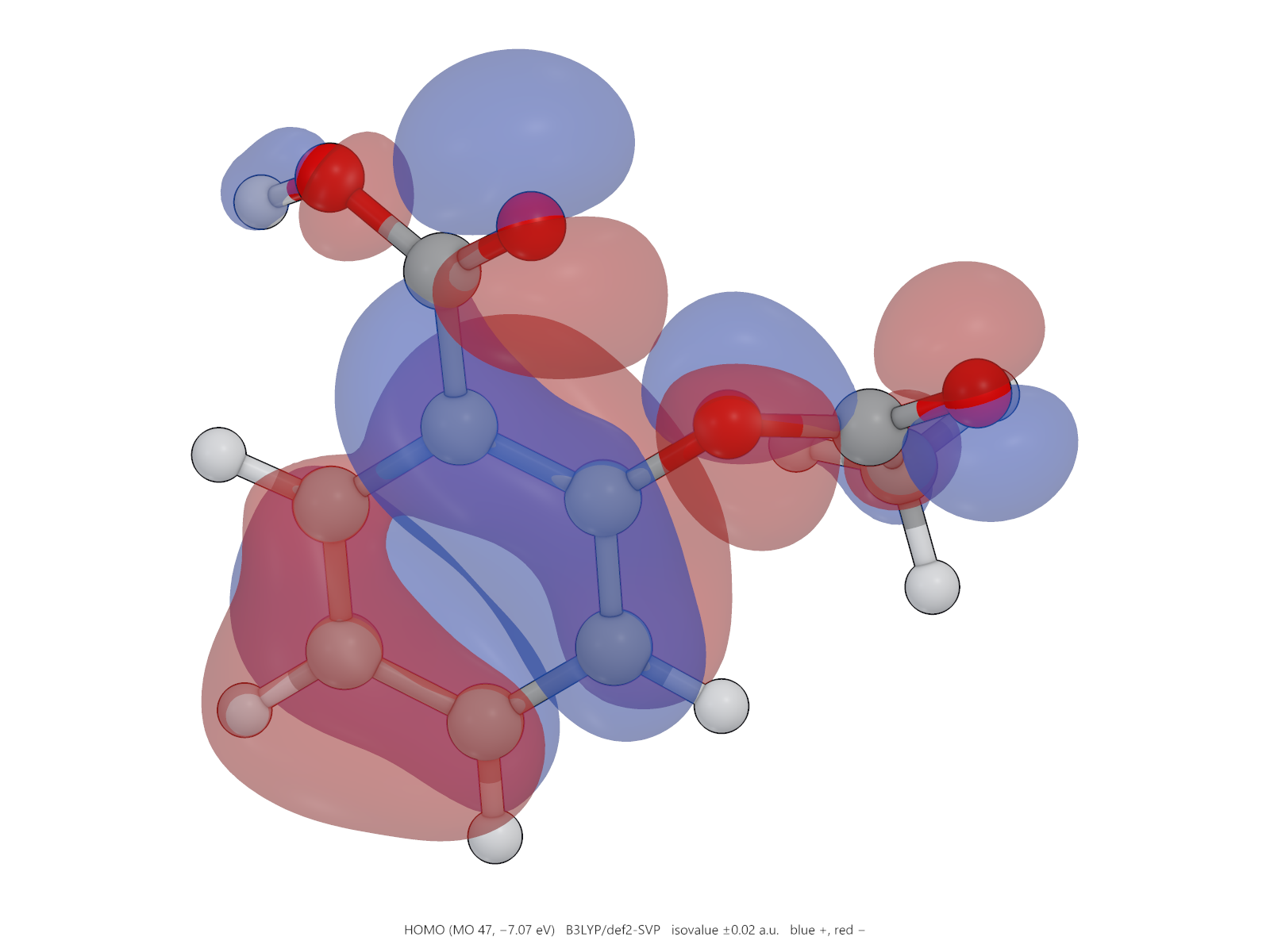
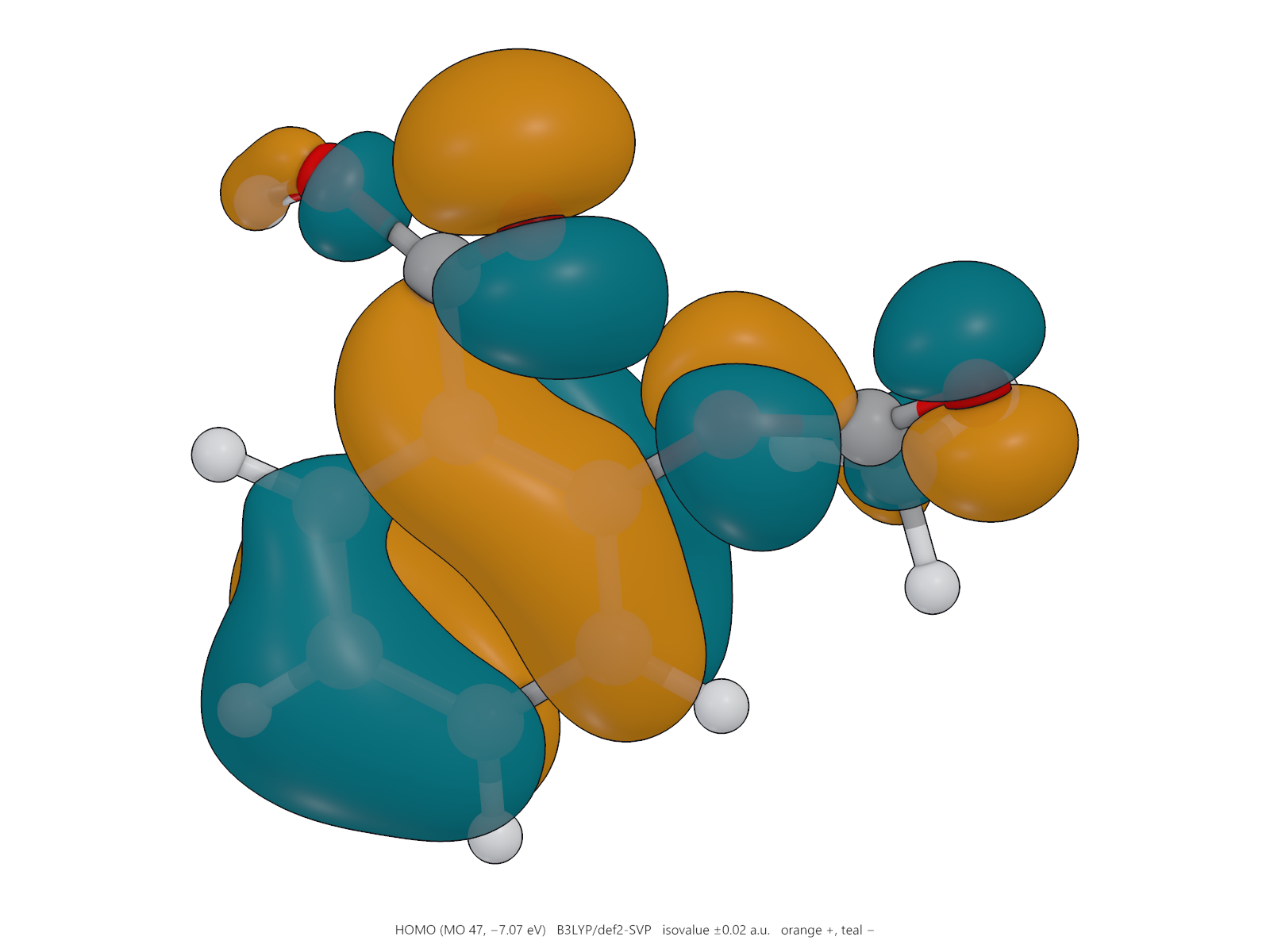
The same orbitals as publication figures
What an orbital picture can and cannot say
- It shows where the density of that one-electron function sits, which is a sound guide to where the molecule reacts.
- The pattern of nodes shows whether the orbital is bonding or antibonding between any pair of atoms.
- It does not show the total electron density, which is the sum over all occupied orbitals, and it is not itself an observable.
- Orbitals from different calculations should not be compared unless the method, basis set and isovalue are the same.